
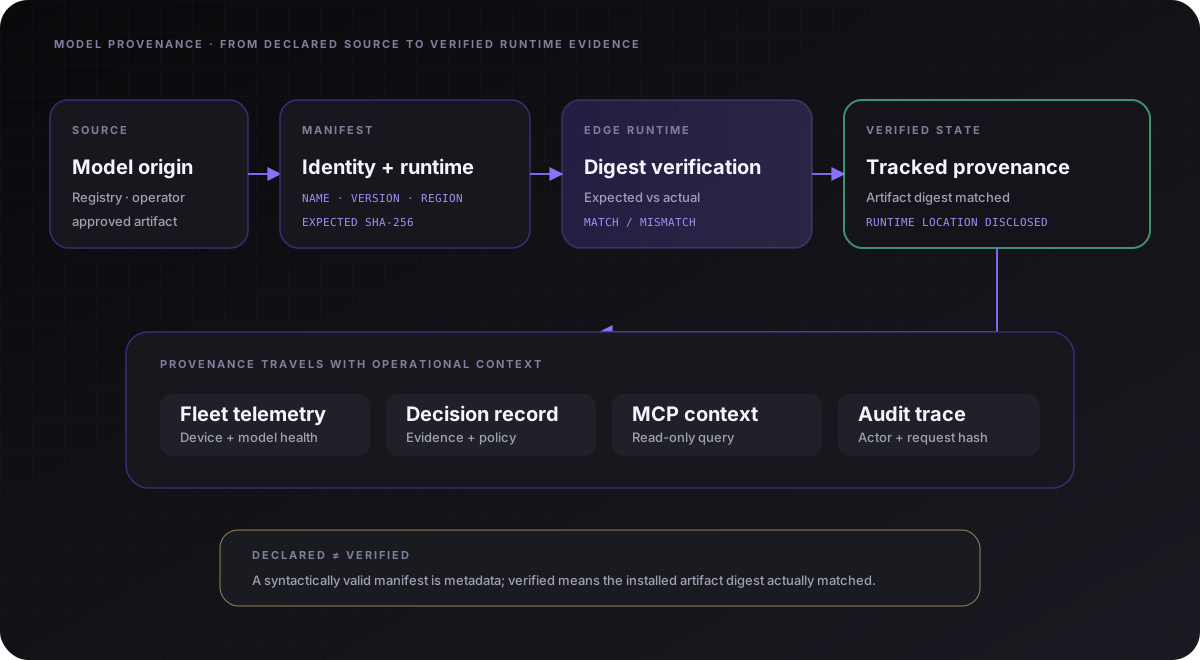
Provenance fields
| Field | Meaning |
|---|---|
name / version | Human-readable identity and release identifier |
source | Declared model origin or operator-supplied registry |
runtime | Local runtime, hosted model identifier or deployment adapter |
sha256 | Expected artifact digest from the installed manifest |
verified | Whether the actual local artifact digest matched the declaration |
runtime_region | Local edge, customer deployment or disclosed AWS region |
profiles / min_memory_mb | Approved hardware profiles and the declared minimum memory envelope |
scope_status | eligible or blocked for the detected target, with explicit reasons |
Provenance states
- Tracked: at least one model is declared and every entry includes a syntactically valid SHA-256.
- Declared: model information exists, but digest coverage is incomplete.
- Manifest missing/invalid: the device cannot establish its expected model lineage.
Declaration is not proof by itself
An agent should report the model as verified only when the device reports an actual digest match. A declared hash without local artifact verification is provenance metadata, not an attestation.
MCP query
{
  "jsonrpc": "2.0",
  "id": 4,
  "method": "tools/call",
  "params": {
    "name": "model.list_provenance",
    "arguments": { "device_id": "odd-example123" }
  }
}